
Last updated September 20, 2026
Full 25-point door and opener safety check with every visit - springs, cables, rollers, tracks, and your LiftMaster or Chamberlain opener included
You get a price before we start. It does not change when the truck arrives.
 Before
 After
After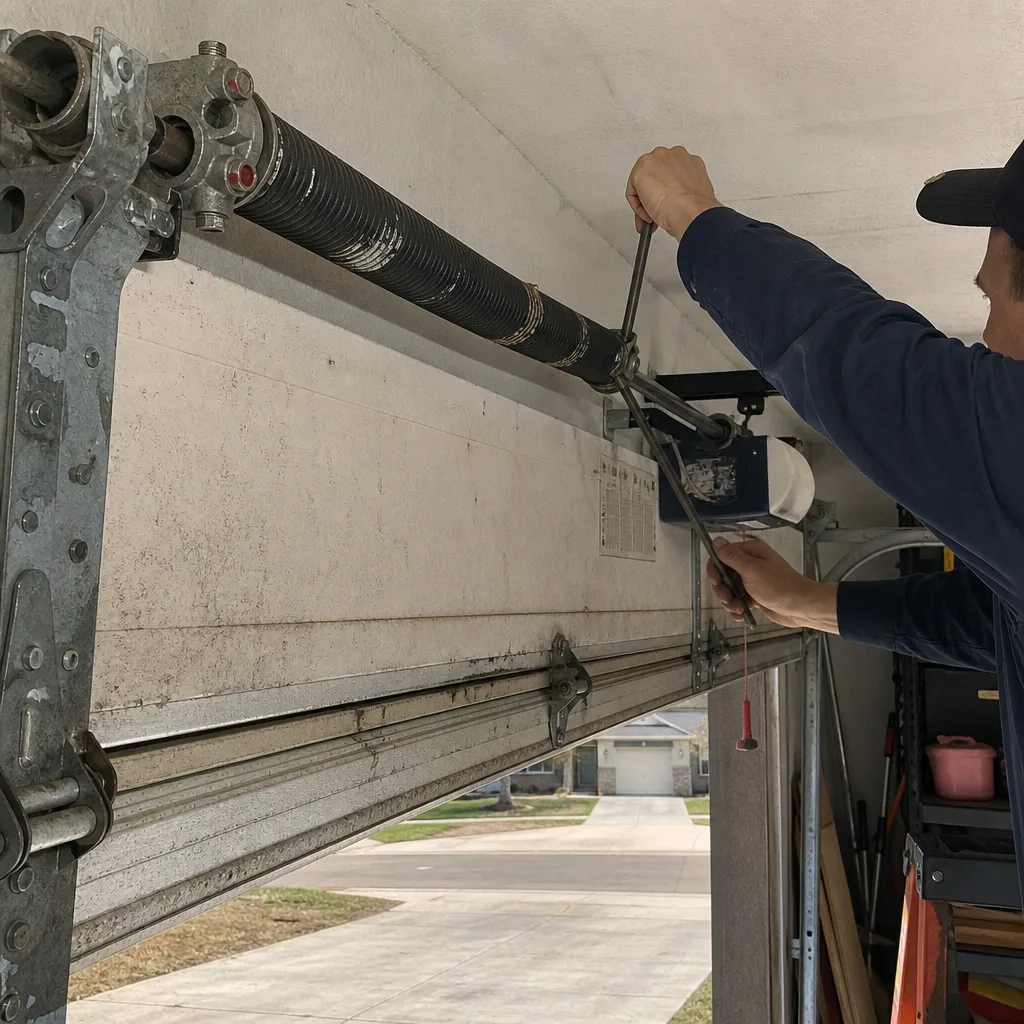 Before
 After
After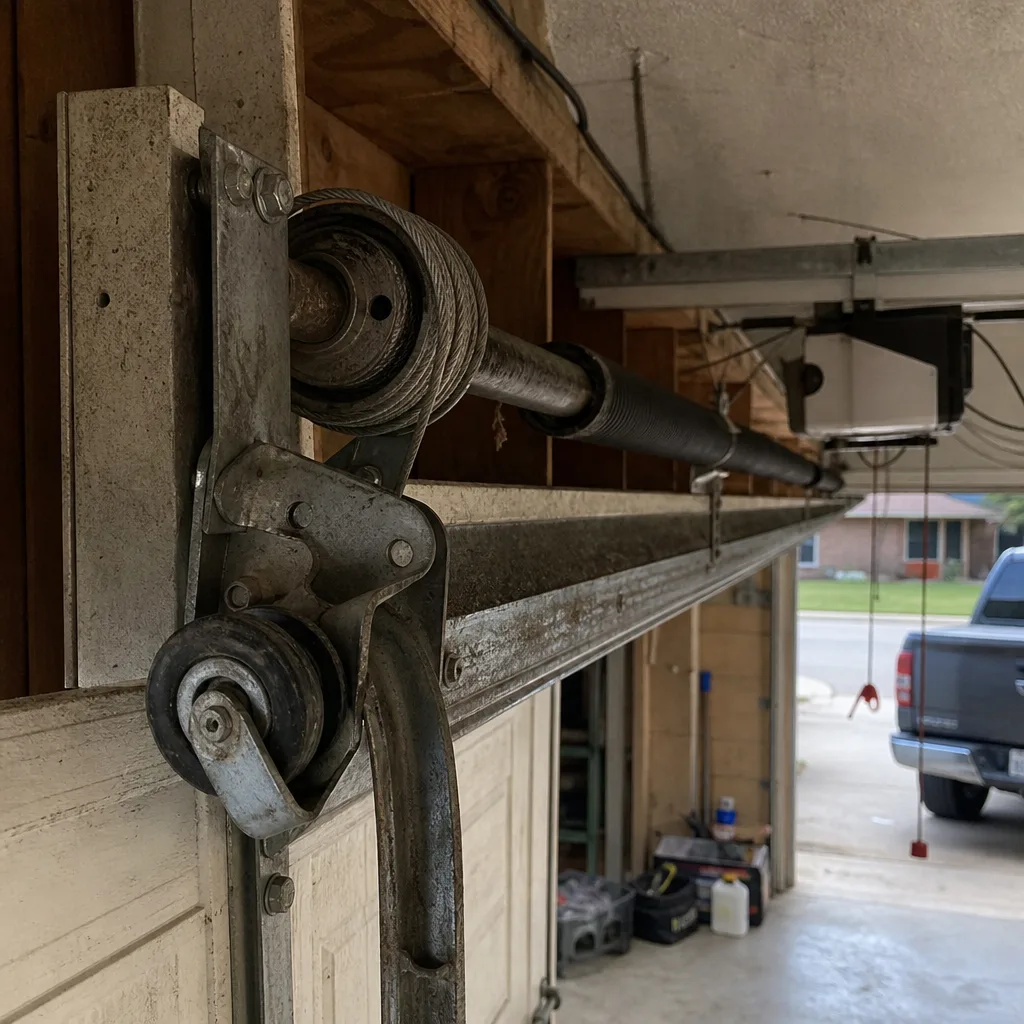 Before
 After
AfterThe Complete Guide to Garage Door in Weatherford
A standard 16×7 garage door in Weatherford cycles through roughly 40°F of daily temperature swing during a March norther. That’s more thermal stress in a single day than a garage door in Houston sees in a week, and the hardware tolerances are the same regardless of zip code. This guide is built around what Weatherford’s specific combination of caliche dust, summer heat expansion, and northers actually does to panels, springs, and seals over a 10-year ownership cycle. You’ll learn how each component works, what it costs to fix in the Weatherford market, when to repair versus replace, and how to read the ratings that matter before you spend a dollar on a new door. For a deeper look at pricing, see our Garage Door Cost Breakdown: The Weatherford Homeowner’s Reference for 2026.
Quick Answer
A garage door in Weatherford is a system of four paired components: panels, springs, tracks and rollers, plus an opener. Expect to spend $285 to $520 for spring replacement, $180 to $340 for panel repair, and $1,400 to $3,800 for full replacement depending on material and insulation. The single most important maintenance task in Parker County is cleaning caliche dust from tracks and rollers every 60 to 90 days, because that dust is abrasive in a way metro-area installs never experience.
Table of Contents
- What Weatherford’s Climate Does to a Garage Door
- The Component Map: Every Part, What It Does, What It Costs
- Caliche Dust and Track Wear: The Parker County Problem
- Door Materials Ranked for Weatherford’s UV and Wind
- How to Read a Wind-Load Rating for Parker County
- Repair, Partial Replacement, or Full Replacement: A Decision Tree
- A 12-Month Maintenance Schedule for Weatherford Homes
- Common Mistakes to Avoid
BeforeAfterWhat Weatherford’s Climate Does to a Garage Door
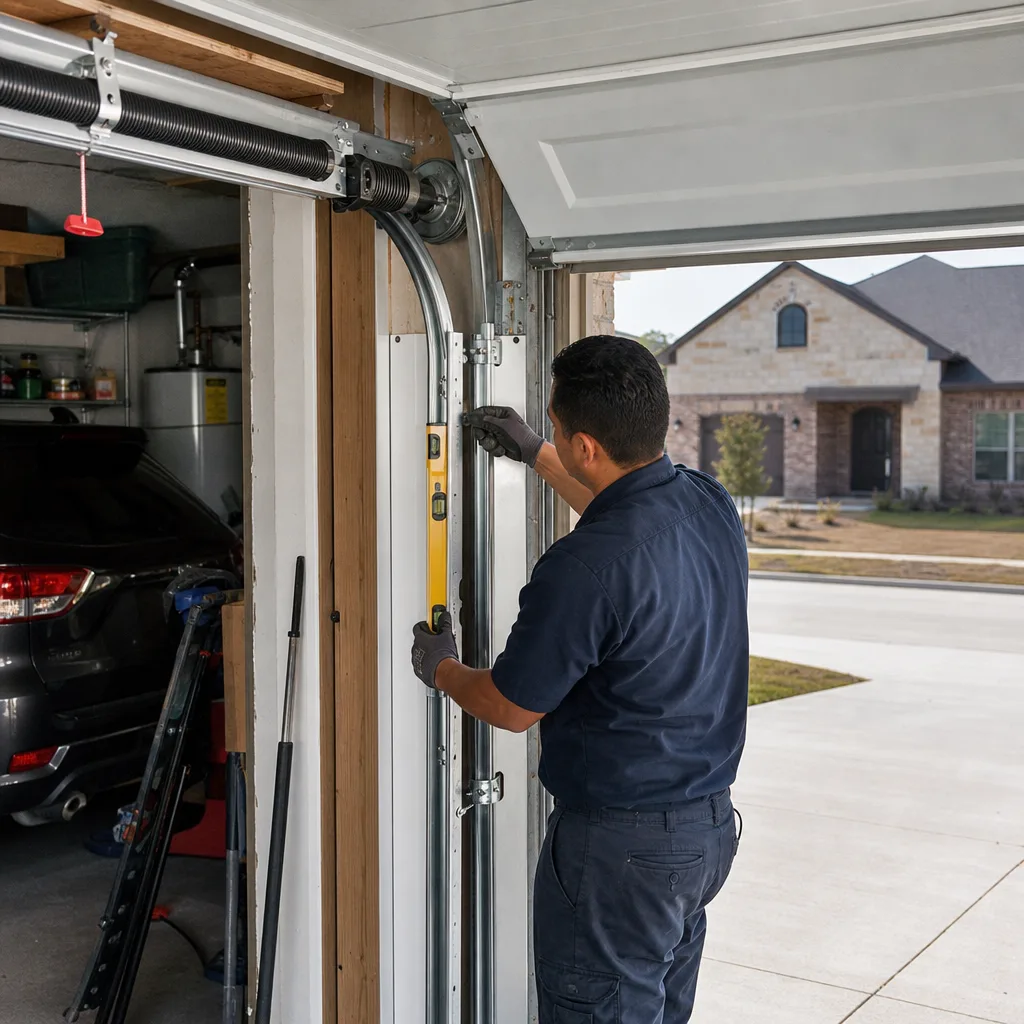
Weatherford sits on the western edge of the Metroplex, far enough out that the heat arrives earlier, the wind carries caliche, and the winter northers drop temperatures faster than the eastern suburbs. Your garage door absorbs all of that. The steel panels expand during a 105°F July afternoon and contract when a norther blows through at 28°F in January. Expansion and contraction are normal, but in Weatherford the daily range can hit 40 degrees during spring and fall transitions, and repeated thermal cycling is what makes panels flex at the seams and springs lose their factory set.
We see the pattern in our repair calls. Doors installed in 2016 and 2017 are now entering the years when the original torsion springs reach their cycle limit, and the thermal cycling here accelerates that timeline. A spring rated for 10,000 cycles will reach that count faster in Weatherford than in a stable coastal climate, simply because the door is used more often. In July, the garage becomes the coolest part of the house, and in January a norther turns it into a windbreak. The door works harder here.
Humidity matters less than people assume. Weatherford is drier than Fort Worth, and that dryness is what keeps wooden doors from swelling, but it also means the vinyl weatherstripping along the bottom of the door dries out and cracks faster than it does in Dallas. A bottom seal that lasts seven years in the mid-cities might need replacing at year five here. That’s not a defect, it’s the local environment, and it’s predictable enough to budget for.
The Component Map: Every Part, What It Does, What It Costs
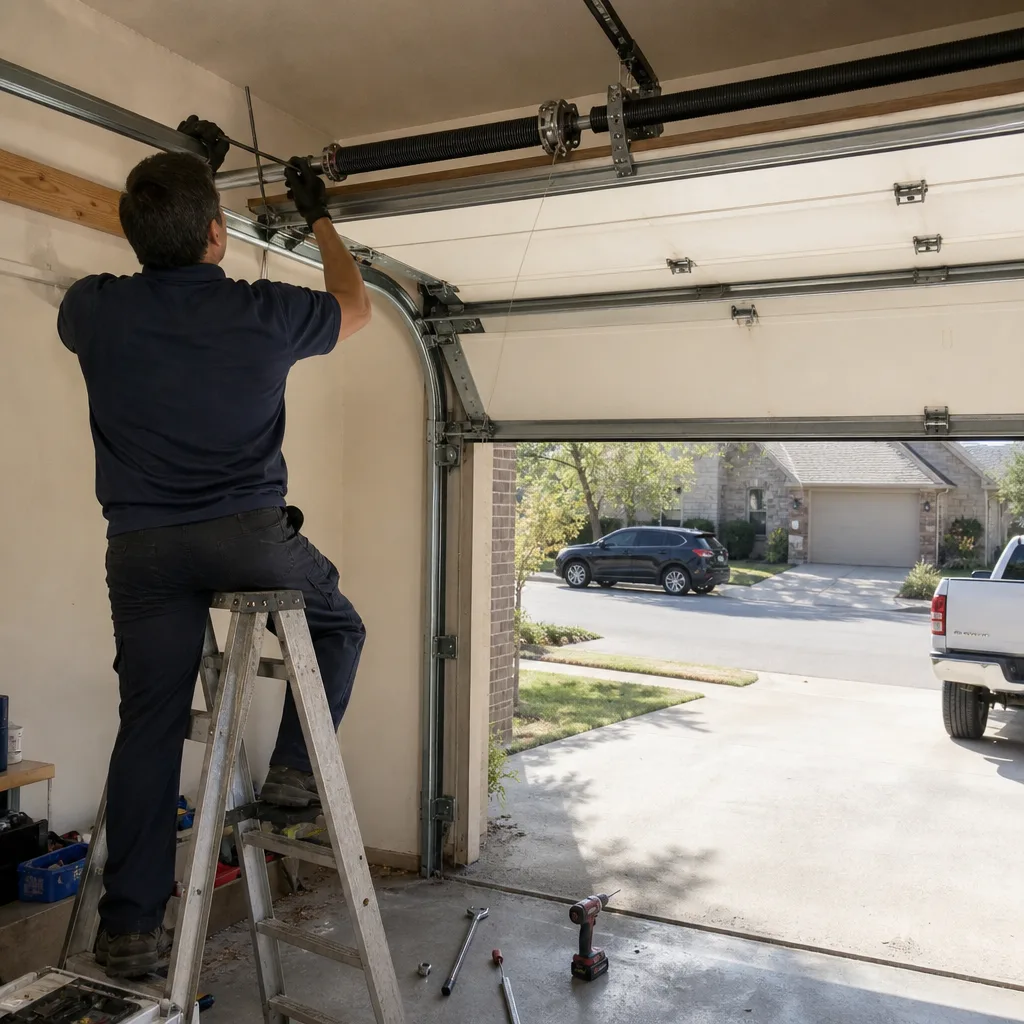
Most garage door problems look mysterious until you know the ten parts that do the actual work. Here’s the full map, with plain-language function descriptions and what each item costs in the Weatherford market as of 2026. These are line-item ranges we quote from, written on paper before any work starts, per Clause 1 of The Haven Standard.
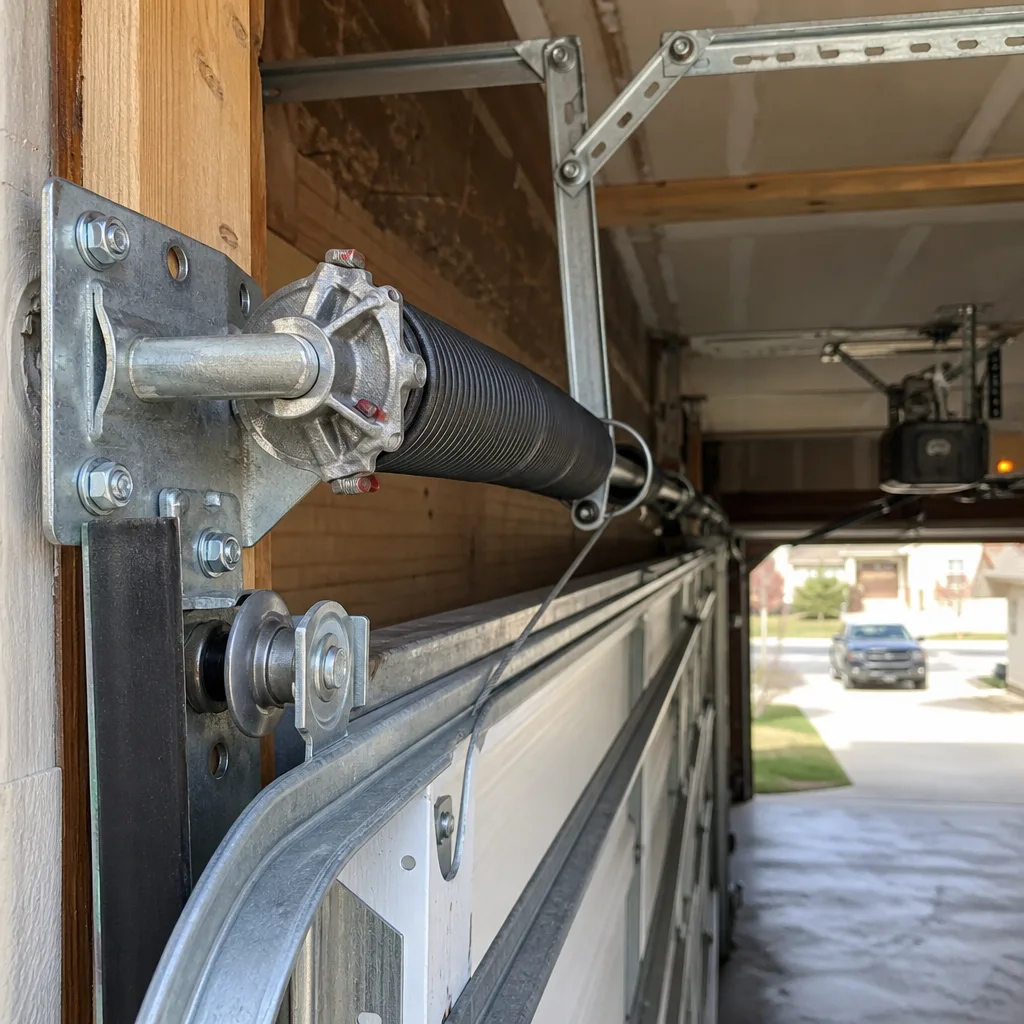
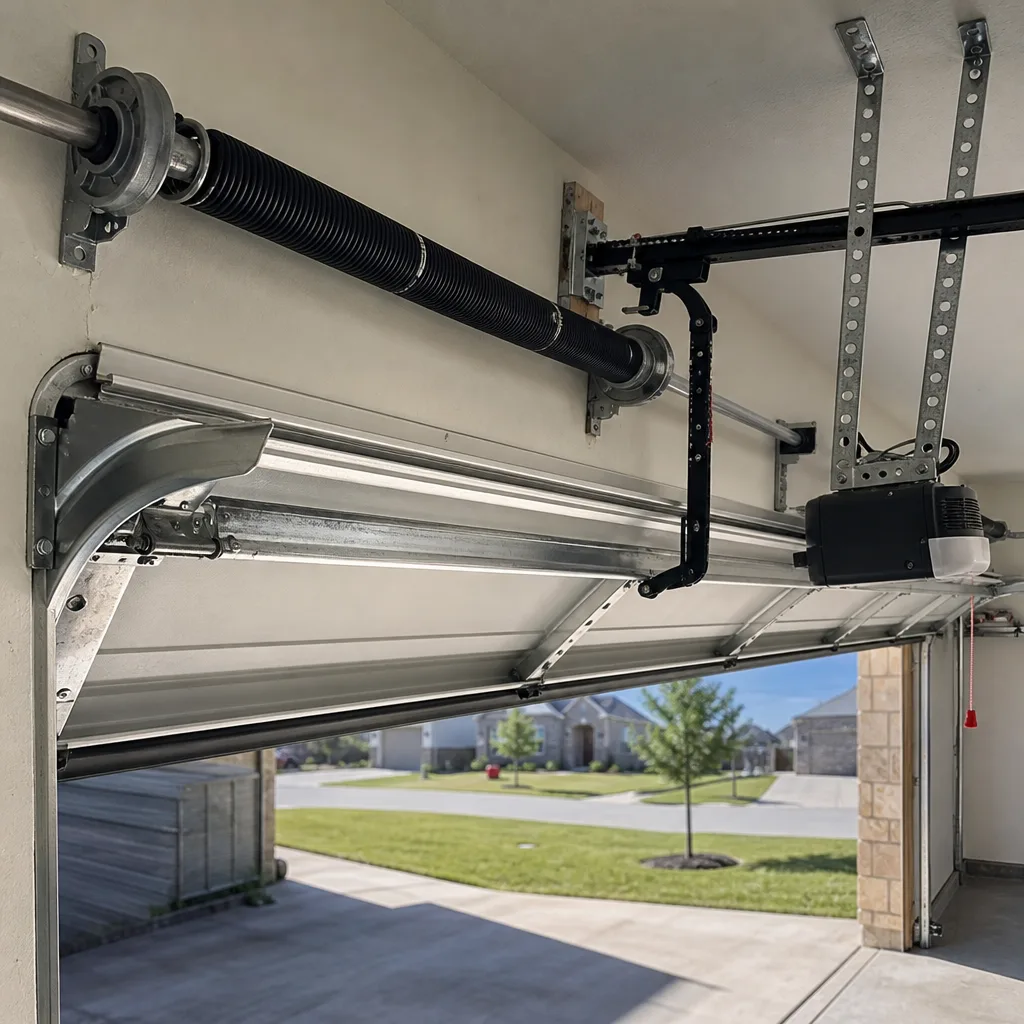
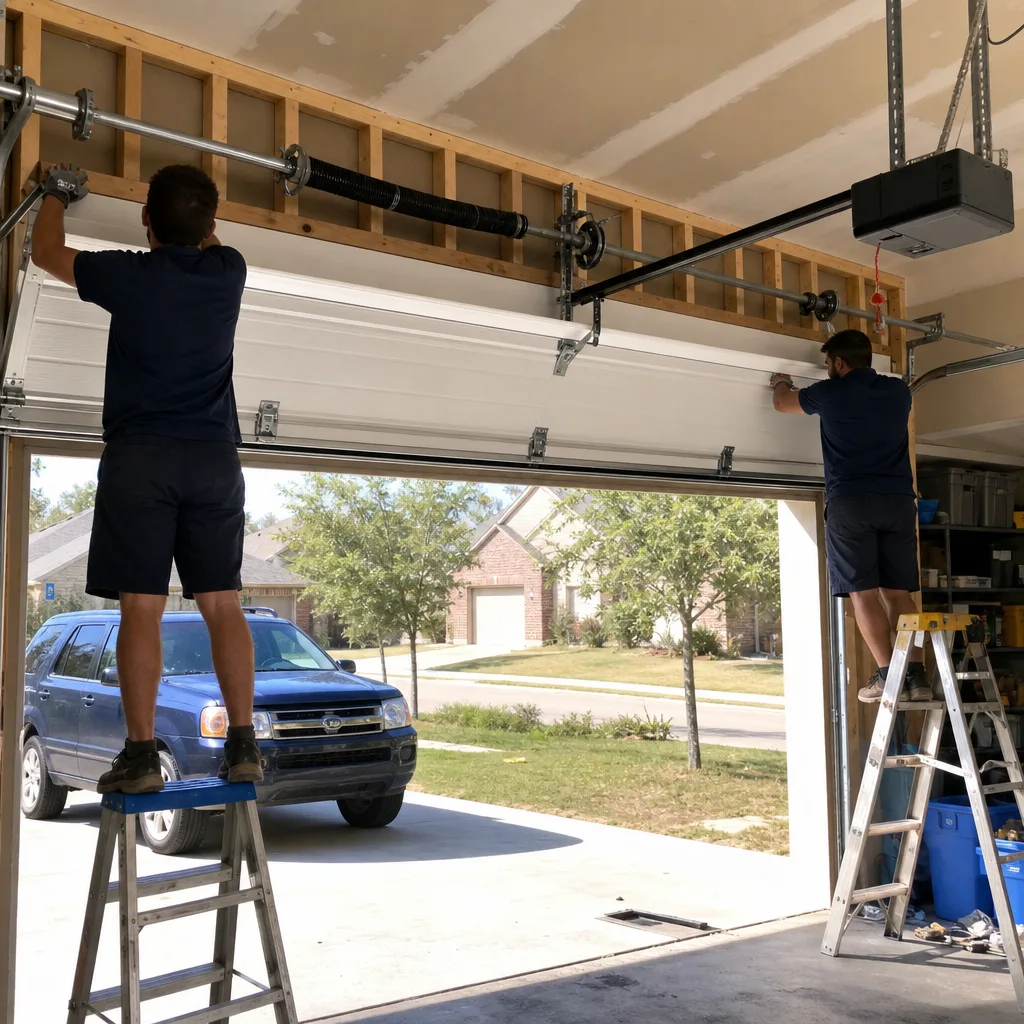
- Torsion spring: The coiled steel spring above the door that counterbalances its weight. When it breaks, the door will not open, and you’ll hear a sound like a gunshot from inside the garage. Weatherford cost: $285 to $520 installed, depending on wire diameter and cycle rating. We always quote the spring by its measured wire gauge and coil count, not a generic “heavy duty” label.
- Extension springs: Older doors have two springs on the sides instead of one torsion spring above. They stretch when the door closes. Cost: $220 to $390 for a pair, including safety cable replacement.
- Cables: The steel cables on each side that lift the door. When a spring breaks, cables can snap or jump the drum. Cost: $85 to $160 per side.
- Drums: The grooved wheels at each end of the torsion spring shaft that wind the cables. A worn drum lets cable overlap and bind. Cost: $110 to $210 per pair.
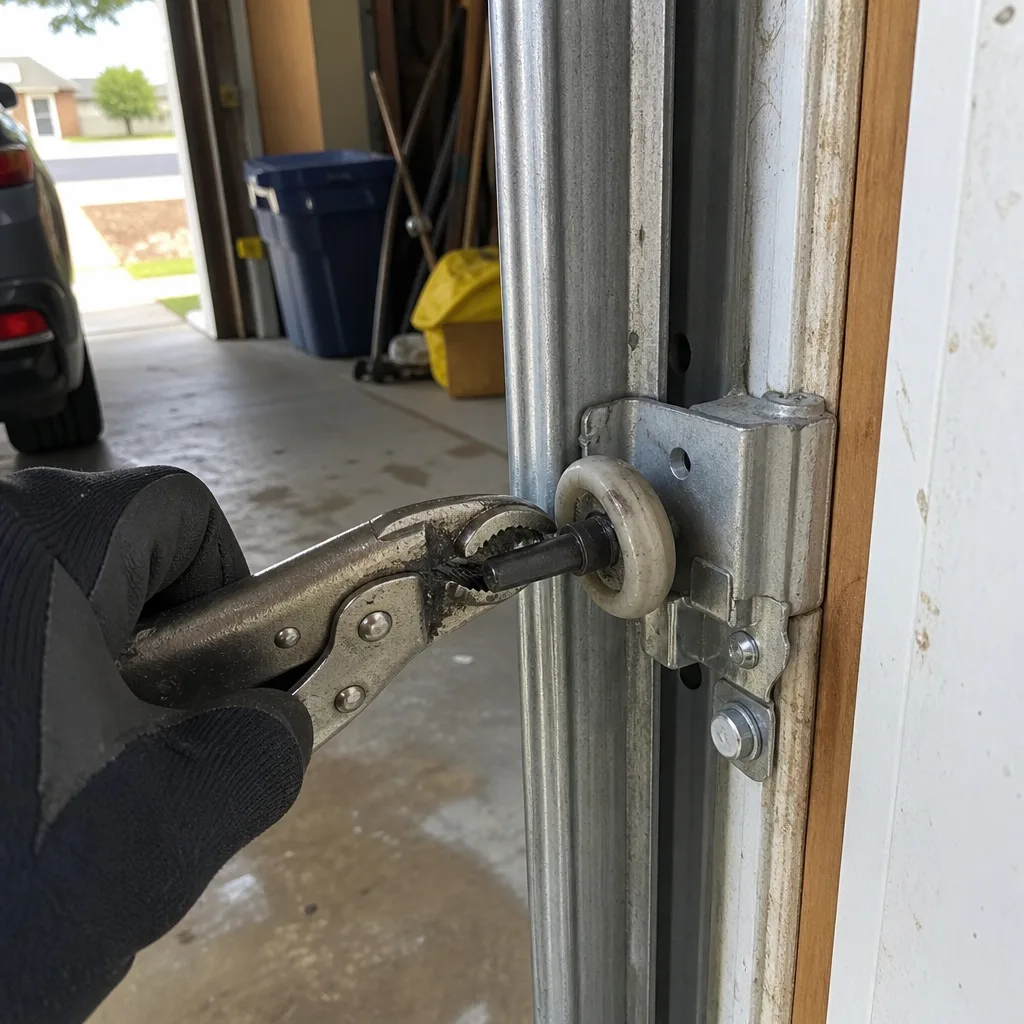
- Rollers: The small wheels that ride inside the track. Nylon rollers are quieter; steel rollers last longer under caliche dust. Cost: $18 to $45 per roller installed, or $180 to $340 for a full set of 10.
- Track: The steel channel the rollers ride in. Bent track from a vehicle strike or wind flex is common for doors facing open pasture or undeveloped lots. Cost: $140 to $310 for a track section replacement.
- Hinges: The metal brackets connecting panels. A seized hinge puts torque on the panel itself and causes cracks. Cost: $25 to $55 per hinge.
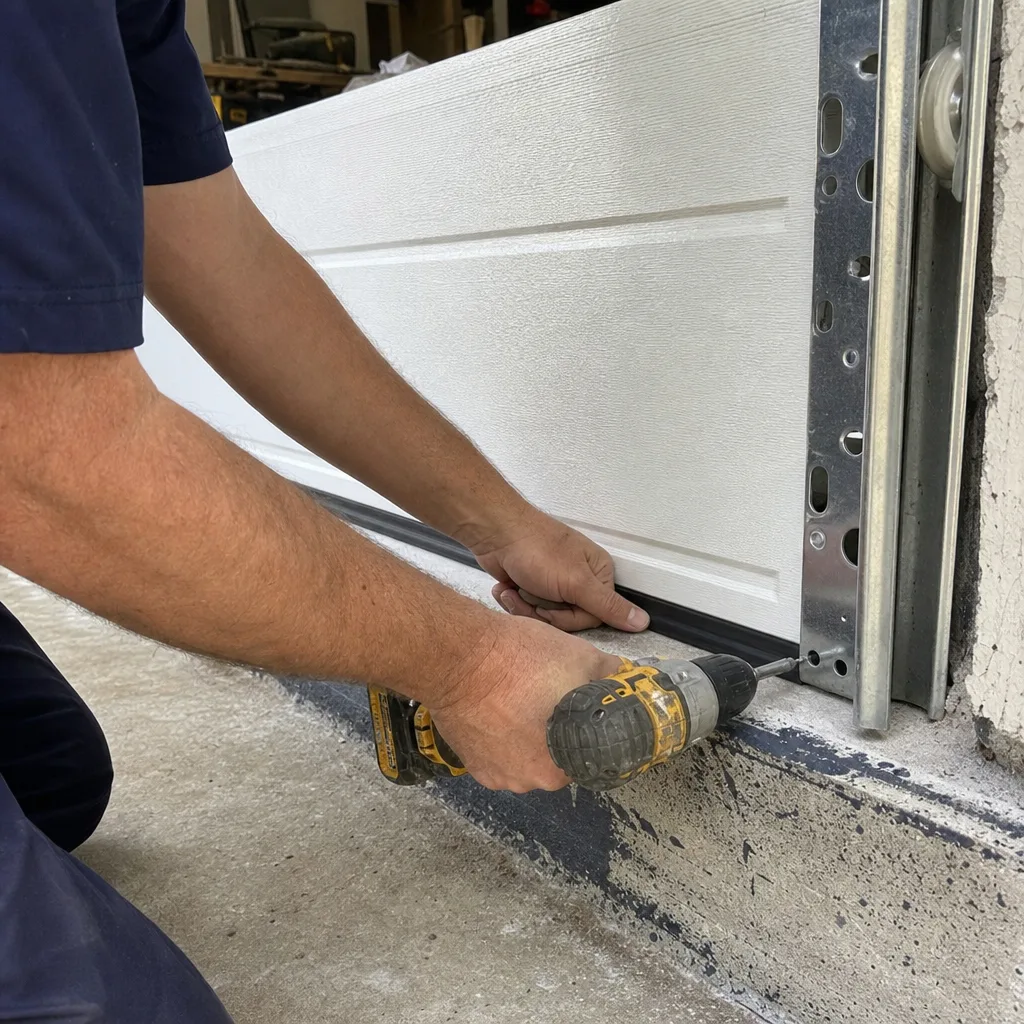
- Bottom seal: The vinyl strip under the door that keeps dust, rain, and insects out. In Weatherford, caliche dust and UV degrade it faster than average. Cost: $65 to $120 installed.
- Safety sensors: The paired photo eyes near the floor that reverse the door if something breaks the beam. Alignment and wiring failures are the most common cause of a door that reverses for no visible reason. Cost: $75 to $150 for sensor replacement or rewiring.
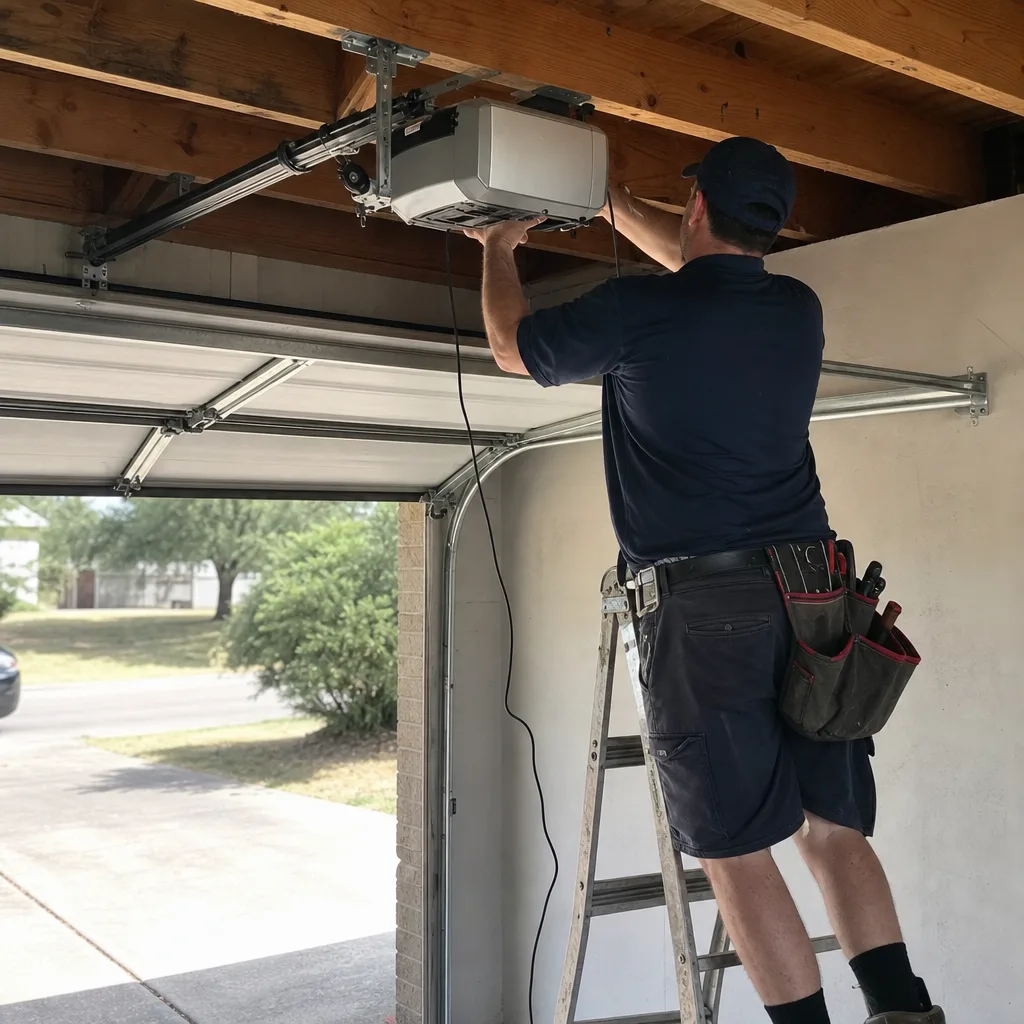
- Logic board: The circuit board inside the opener that translates button presses and remote signals into motor commands. When it fails, the opener may work from one input but not another. Cost: $140 to $280 for replacement, vs. $350 to $600 for a full new opener.
Those are the numbers we put on paper in Weatherford. Not a “call for a quote” line. A written line-item quote, with a written scope, before the first tool comes off the truck.
Caliche Dust and Track Wear: The Parker County Problem
Caliche is the limestone-based soil that covers most of Parker County. It’s fine-grained, slightly abrasive, and when a north wind picks up, it blows into garages through every gap in the weatherstripping. Once inside, it settles on the track and roller surfaces, where it acts as a grinding compound every time the door opens and closes. A garage door that cycles four times a day in Weatherford accumulates more track wear in a year than the same door in a Fort Worth suburb sees in three.
The visible sign is premature roller wear. Nylon rollers start to flatten on the contact surface, and steel rollers develop rough spots that you can feel when the door moves. The door gets louder before it fails, and if you ignore the noise, the roller can seize and jump the track entirely, which leaves you with a door stuck halfway open and a bent track section.
The fix is simple and specific to this area. Every 60 to 90 days, wipe the inside of each track with a dry cloth, then blow out any remaining dust with a leaf blower or compressed air. Do not grease the track. The rollers carry sealed bearings in most modern doors, and adding grease to the track just creates a paste that holds more dust. Once a year, clean the rollers themselves with a cloth and check for flat spots. In our experience, Weatherford doors that get this quarterly cleaning routinely extend roller life by two to three years over doors that don’t. If you’d rather have a technician handle it, Garage Door Repair in Weatherford covers this as part of a standard service call.
Door Materials Ranked for Weatherford’s UV and Wind
Weatherford gets west-Texas ultraviolet intensity without the tall-building shade of downtown Fort Worth. A south-facing or west-facing garage door here sees direct sun from morning through late afternoon for nine months of the year. That UV load fades paint, warps wood composites, and degrades the vinyl trim on aluminum doors. Here’s how the three common door materials rank for this specific climate, based on what we see in the field.
- Steel, 24- to 26-gauge with a baked-on finish (best overall): A quality steel door with a factory-applied polyester finish holds up to UV better than anything else. Higher gauge numbers mean thinner steel, so 24-gauge is the sweet spot for wind resistance without excessive weight. Steel doors don’t warp, and a factory finish doesn’t need repainting for 15 to 20 years. The downside is thermal transfer, which is why insulated steel with a polyurethane core is the default choice for attached garages.
- Wood composite (acceptable with maintenance): Composite doors offer the look of real wood without the full maintenance burden, but they still expand and contract more than steel. In Weatherford’s dry heat, the seams stay tight, but the UV will fade the finish within five years if the door faces south or west. Count on repainting or refinishing every four to six years. We also see more panel seam splitting on composites after a hard norther drops the temperature 40 degrees in six hours.
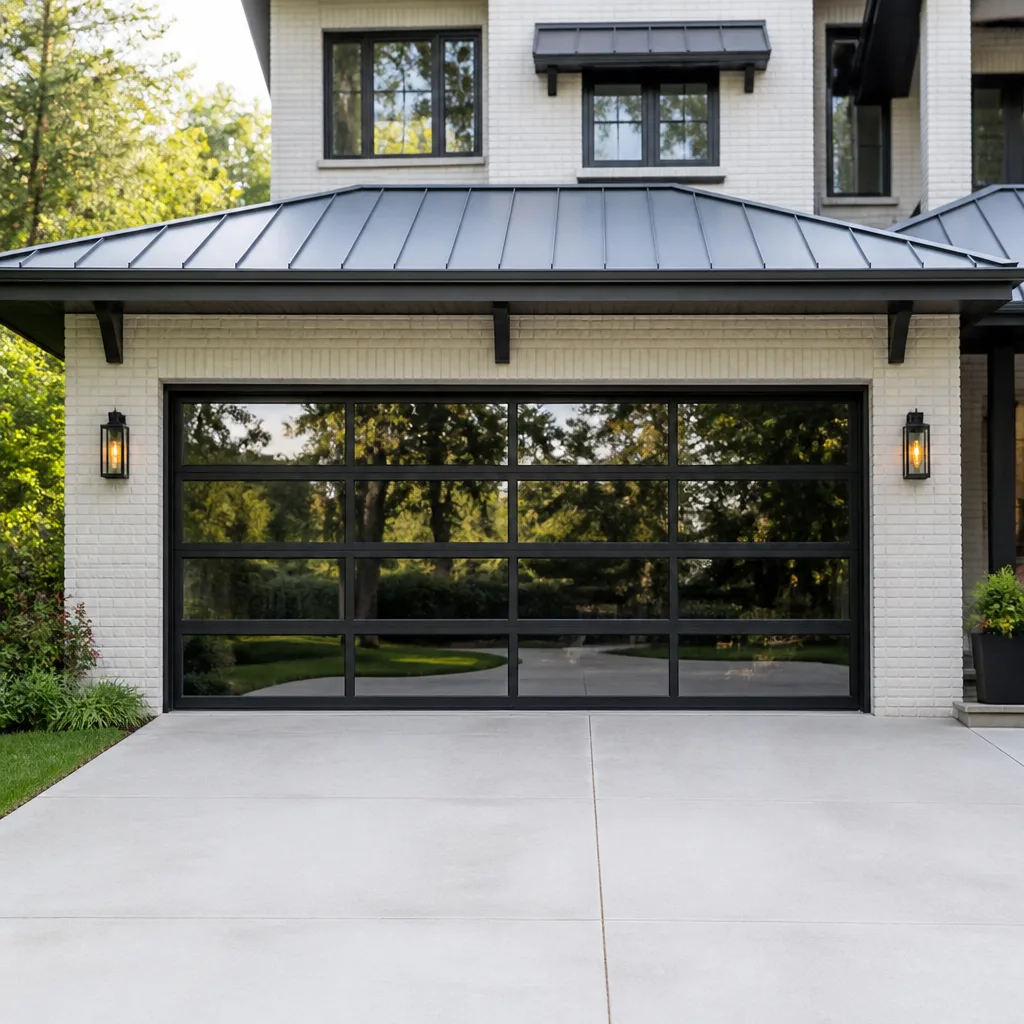
- Aluminum (situational only): Aluminum full-view doors with glass panels are popular for detached shops and modern homes, but they dent more easily than steel, and their thin frame sections flex under wind load. The weight of flying debris during a Weatherford thunderstorm will mark an aluminum door where a 24-gauge steel door shrugs it off. If you want the glass look, spec a door with a steel frame and tempered glass panels, and expect to pay $800 to $1,500 more than a comparable steel door.
Brand-wise, we service doors from Raynor, Clopay, Amarr, and Wayne Dalton regularly, and the quality differences show up mostly in the finish warranty and the gauge consistency. A Raynor or Clopay door with a 24-gauge face and a factory finish will outlast a thinner import by five to eight years in direct Weatherford exposure. For install options and written pricing, see Garage Door Installation in Weatherford.
How to Read a Wind-Load Rating for Parker County
Every garage door sold in Texas carries a wind-load rating, expressed in pounds per square foot (psf). The rating tells you how much wind pressure the door and its hardware can withstand without deflecting or pulling out of the track. Parker County sits in a region where the design wind speed is typically 110 to 115 mph for residential structures, which translates to a required wind-load rating of 20 to 25 psf for most homes in the county, depending on your exact location and the door’s height. For full details on requirements, see Garage Door Permits, Codes & Inspections in TX: What You Need to Know.
The rating is printed on the door’s spec label, usually attached to the inside of the door face. Look for a line that reads something like “Design Pressure: 22 psf” or a UL label with a load rating. If the number is below 20 psf, the door was likely spec’d for a lower wind zone, and it may not meet Parker County building requirements for a new install. Doors that face open land to the north or west, which is common in the neighborhoods outside the Weatherford city core, take more direct wind than doors shielded by other structures.
The wind-load rating matters for more than code compliance. A door that meets the 20 to 25 psf requirement has reinforcement struts (horizontal steel stiffeners on the inside face) and heavier-duty track brackets. Without them, a 70 mph gust during a thunderstorm can push the door inward enough to pop a roller out of the track. We’ve replaced track sections after storms where the door itself was undamaged but the hardware wasn’t rated for the wind it met. When you’re getting a quote for a new door, ask the installer to show you the wind-load label, not just tell you the door “meets code.” The label is the evidence, and it should be on your written quote.
Repair, Partial Replacement, or Full Replacement: A Decision Tree
When something breaks, the right fix depends on three facts: the age of the door, the condition of the springs, and the extent of panel damage. Here’s the decision path we walk customers through in Weatherford, written out so you can work through it yourself before you call anyone.
- Door is under 8 years old, single component failure (spring, cable, roller, hinge): Repair the part. A spring replacement between $285 and $520 makes economic sense on a door with another 10-plus years of structural life. Ask for the spring’s cycle rating, not just the price. A 20,000-cycle spring costs $60 to $90 more than a 10,000-cycle spring and lasts roughly twice as long.
- Door is 8 to 15 years old, one or two panels damaged, springs still good: Partial replacement. Replacing a single panel or bottom section costs $300 to $700 installed and makes sense when the door still matches a currently available model and finish. If the door’s manufacturer has discontinued the line, color matching is approximate, and full replacement may make more sense.
- Door is 15-plus years old or has three or more damaged panels: Full replacement. Panel replacement on a door this age often exceeds 60 percent of a new door’s cost, and the surviving panels are in the same end-of-life window. A new door with a proper wind-load rating, new springs, and new track will run $1,400 to $3,800 in Weatherford depending on material, insulation, and size.
- Springs have been replaced once and are failing again, regardless of door age: Full replacement usually wins. Two spring replacements on the same door means the door itself is near the end of its practical life, and a new door comes with new springs sized for the door’s exact weight, which you’d pay for separately anyway.
The one constant in every branch: get the price in writing before work starts. We put it on paper because if the scope changes, you should see the changed number and approve it before anyone touches a tool. That’s Clause 1 of The Haven Standard, and it’s been our practice since the founding in 2015. For a more detailed walkthrough of repair-specific decision points, see Garage Door Repair in Weatherford.
A 12-Month Maintenance Schedule for Weatherford Homes
This schedule accounts for the specific seasonal patterns in Weatherford: caliche dust in spring wind season, peak UV in summer, and sharp temperature drops in winter. Thirty minutes four times a year beats a $500 repair in year six. Here’s what we recommend, month by month.
March (pre-storm season)
- Clean tracks and rollers thoroughly to remove winter dust and prepare for spring winds.
- Inspect the bottom seal for cracks. Replace now if it’s brittle, before summer heat bakes it further.
- Test the auto-reverse function by placing a 2×4 flat under the door and closing. The door should reverse within two seconds of contact.
June (pre-heat)
- Lubricate the torsion spring with a silicone-based garage door lubricant. Do not use WD-40; it’s a solvent, not a lubricant.
- Check weatherstripping along the sides and top of the door opening. UV starts degrading vinyl at this point in the year.
- Listen for new noises during operation. A squeak that wasn’t there in April is a roller bearing or hinge starting to go.
September (post-heat, pre-northers)
- Clean tracks and rollers again, focusing on dust caked in by summer heat.
- Inspect cables for fraying. A frayed cable is a break waiting to happen, and it’s a $85 to $160 fix now versus a potential door-drop later.
- Check all hinge bolts and track brackets for tightness. Thermal cycling through summer loosens fasteners.
December (pre-freeze)
- Test the door balance by disengaging the opener and lifting the door manually. It should stay in place at half-height. If it drops, the springs are weakening.
- Inspect the bottom seal again after the first hard freeze. Vinyl that cold-cracks needs replacement before spring winds push dust in.
- Verify the opener’s force settings. A door that closes with too much force in winter, when the metal is contracted, can damage a panel corner.
If any of these items turn up something you’d rather not handle, a service call is less expensive than the damage it prevents. For opener-specific maintenance and troubleshooting, see Garage Door Opener Repair & Installation in Weatherford.
Common Mistakes to Avoid
- Greasing the track. Grease attracts caliche dust and creates a grinding paste that destroys rollers. The track should be clean and dry. Lubricant goes on the spring and the roller bearings, not the track itself.
- Ignoring a spring that’s past its cycle count. Torsion springs have a rated lifecycle. In Weatherford, with heavier use than the national average, a 10,000-cycle spring might fail in five to seven years. If your door is seven years old and on original springs with heavy daily use, budget for replacement before it breaks.
- Replacing one spring instead of both. If one torsion spring breaks, the other is at the same cycle count and under the same wear. Replacing only the failed spring means paying a second labor charge within a year when the other one lets go. We always recommend replacing both.
- Not checking the wind-load rating on a new door. A door spec’d for a lower wind zone costs less initially but may fail in the first strong thunderstorm. The label is on the door, and any honest installer will show it to you.
- Using a general contractor for garage door work. Garage door springs and cables require specialized tools and knowledge. A generalist doing you a favor is how we see bent panels, misaligned tracks, and safety sensors wired backward.
- Deferring caliche dust cleaning to “sometime this year.” The dust acts every time the door cycles. A quarterly five-minute cleaning is the single highest-return maintenance task in Weatherford.
When to Call a Professional
Call a professional if you hear a loud snap from the garage (a broken torsion spring), if the door is off its track, if a cable is frayed or snapped, or if the door is too heavy to lift manually past waist height. These are the situations where the energy stored in the spring or the weight of the door itself can cause serious injury. Torsion springs hold enough force to break bone, and a falling door can weigh 150 to 300 pounds. Do not attempt spring or cable work without proper training and winding bars. Servo Garage Doors Weatherford offers free estimates in Weatherford and the surrounding Parker County area. Call (940) 353-1271and we’ll put a written number and a written scope in your hands before any work begins.
Frequently Asked Questions
Most repairs in Weatherford run between $180 and $520 depending on the component. A spring replacement is $285 to $520, a panel repair $180 to $340, and a bottom seal $65 to $120. Every quote is written and line-itemed before work starts, so the number you approve is the number you pay. Call (940) 353-1271 for an exact quote on your specific door.
Every 60 to 90 days, because caliche dust from Parker County soil acts as an abrasive every time the door cycles. A dry cloth wipe followed by compressed air is enough. Skip the quarterly cleaning and you’ll replace rollers two to three years earlier than you would otherwise.
Steel, 24- to 26-gauge with a factory-applied finish, is the best material for Weatherford’s UV intensity. It doesn’t warp like wood composite, holds its finish for 15 to 20 years, and resists wind-driven debris better than aluminum. Insulated steel with a polyurethane core is the standard for attached garages.
Yes. Our trucks carry torsion springs in the common wire gauges, cables, rollers, hinges, and bottom seals, so most repairs are completed on the first visit. Live phone coverage is available 24 hours a day, including holidays. Call (940) 353-1271 and you’ll speak to a person, not a recording.
No. The price is quoted in writing before work begins, per Clause 1 of The Haven Standard, and that’s the price you pay unless you approve a written change. If the technician finds something additional, you’ll see it written down and approve it before any extra work happens.
Yes. Our vehicles are stocked with the failure-prone components: torsion springs in common sizes, cables, drums, rollers, hinges, bottom seals, and opener logic boards. Most Weatherford service calls are completed on the first trip without ordering parts.
The Bottom Line
A garage door in Weatherford works harder than the national average, and the differences are predictable: caliche dust attacks rollers and tracks, UV attacks finishes and seals, and northers stress panels and springs. The countermeasure is the same for every failure mode: clean the tracks quarterly, know your spring’s cycle count, read the wind-load label before buying, and get the price on paper before anyone touches a tool. If something breaks, the decision is a straightforward path based on door age and spring condition, and the cost is within a range you can budget for before you call. Explore more guides & resources on keeping your door running in Weatherford’s climate. Servo Garage Doors Weatherford was built in 2015 on one founding rule: the customer sees the failed part before anyone quotes a replacement. That means a documented photo record on every visit, a written price and written scope before any work starts, and a technician with a license number on the page who hands you the evidence when the job is done.
Written by Marcus Deller, Owner at Servo Garage Doors Weatherford, serving Weatherford since 2015.